Animals enter Danbury chimneys through uncapped or damaged crowns, and the fix has two parts: remove the animal or nest, then close the opening. Chimney swifts, starlings, and squirrels commonly drop nesting material…
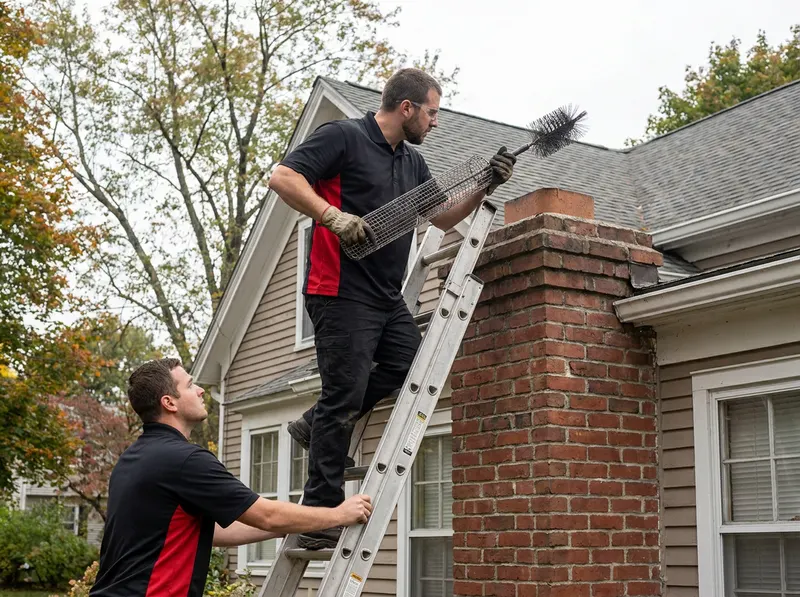
Animals enter Danbury chimneys through uncapped or damaged crowns, and the fix has two parts: remove the animal or nest, then close the opening. Chimney swifts, starlings, and squirrels commonly drop nesting material down flues in older Germantown and Hayestown homes; raccoons den in wider fireplace flues in wooded lots near Tarrywile Park and Bear Mountain Reservation. To remove a bird from a chimney or remove the nest, the flue is opened, inspected from the top and the smoke chamber, and the material is worked out and bagged. Chimney swifts are federally protected under the Migratory Bird Treaty Act, so an active nest with eggs or young cannot be removed until the birds fledge, usually by late summer.
After the animal is out, the chimney is cleaned out so any droppings, urine-soaked debris, and dislodged creosote are removed before the fireplace is used. A Chimney Safety Institute of America (CSIA) Level 1 inspection checks the flue and cap; a Level 2 inspection, with a camera, is used when there was a nest fire, water damage, or the animal caused a blockage that needs verification. NFPA 211 recommends a spark arrestor screen with openings no larger than 3/4 inch, which is small enough to keep raccoons out and to stop birds and burning embers while still allowing draft.
The cap decides how long the problem stays fixed. A stock galvanized cap is the cheapest option and fits standard single flues, but the mesh thins in a few winters and rusts. A 316 stainless mesh animal spark arrestor resists Fairfield County road salt and lake-effect moisture off Candlewood Lake and holds its shape far longer. For oversized, oval, or multi-flue crowns common on older King Street and Padanaram houses, a custom chimney animal guard is fabricated to the crown dimensions so there is no gap for a raccoon to pry. If the flue is a single standard size and you mainly want to stop birds and sparks, a stock 316 stainless cap is enough; if the crown is odd-sized or a raccoon has already forced entry, a custom-fitted guard is the durable choice. The trade-off is straightforward: a stock cap costs less up front, a custom guard costs more but seals a nonstandard opening completely.
Homeowners comparing bids in Mill Plain, Miry Brook, Great Plain, Beaver Brook, Shelter Rock, and Clapboard Ridge often get some quotes before deciding. A free on-site estimate measures the actual flue and crown so the arrestor is sized correctly rather than guessed at over the phone. Every removal and install is photo-documented, and when a chimney only needs a cap and no repair, that verdict is stated plainly.
Every job gets a firm, written price after a free on-site visit.
Tell us about your animal removal & spark arrestor job in Danbury and we'll send a clear, written quote, usually the same day.
 Crown Flue Chimney Sweep