A clogged flue and a damaged flue are two different problems that get confused. "I got my flue clogged" usually means debris, a bird or squirrel nest, or heavy creosote (CSIA rates Stage 3 glazed creosote as a fire…
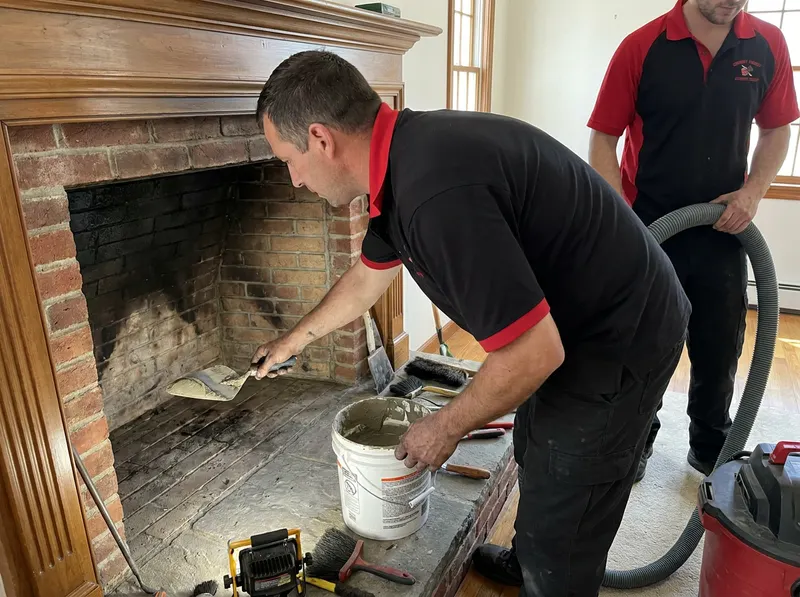
A clogged flue and a damaged flue are two different problems that get confused. "I got my flue clogged" usually means debris, a bird or squirrel nest, or heavy creosote (CSIA rates Stage 3 glazed creosote as a fire hazard), that is cleared by flue cleaning, not repair. "I want to seal it off" describes an abandoned flue, often from a removed wood stove or a decommissioned oil furnace in older Germantown and Beaver Brook homes, where a code-compliant cap and closure stop drafts, moisture, and animals from entering. A cracked terra-cotta tile or a corroded liner is a safety defect that calls for chimney relining. The camera scan tells which of the three applies before any price is quoted.
A masonry chimney flue in many pre-1960 houses around Padanaram, Great Plain, and Clapboard Ridge is lined with clay tile. When tile mortar joints fail or a chimney fire cracks the tile, flue gases can leak into wall cavities, NFPA 211 requires a sound, continuous liner for the appliance in use. Relining with a UL 1777 stainless-steel liner sized to the appliance restores that barrier. A 6-inch liner suits most gas and modern wood stoves; a 7- or 8-inch liner suits an open masonry fireplace. Homes near Candlewood Lake and along the higher ground of Shelter Rock see more wind-driven rain, which speeds corrosion in unlined or thin flues.
Decision-fit runs plainly: if the draft dropped and smoke spilled after leaves fell, the flue is likely clogged and needs clearing, not relining. If a camera shows a single cracked tile near the smoke chamber, a cast-in-place or stainless sleeve seals that section. If the entire tile column is spalled, common in Mill Plain and Miry Brook chimneys that have burned wood for decades, a full-length liner is the durable fix. An unused flue in a two-flue chimney is sealed at both ends rather than relined, which costs far less. The trade-off is straightforward: sealing off a flue you no longer use is the cheapest path but permanently removes that venting option; relining preserves the flue for future appliances at higher cost.
The process runs in order: (1) a Level 1 or Level 2 inspection with an internal camera, (2) photo documentation shown to the homeowner, (3) a written scope naming the liner size and material or the sealing method, (4) the on-site free estimate, and (5) the repair, most single-flue jobs finishing in one day. "Is this a chimney company", yes, a local Danbury chimney sweep serving Fairfield County, not a national lead-reseller. Verdicts include "you don't need a repair" when the camera shows a sound flue; the inspection stands on its own value.
Every job gets a firm, written price after a free on-site visit.
Tell us about your flue repair & sealing job in Danbury and we'll send a clear, written quote, usually the same day.
 Crown Flue Chimney Sweep