A chimney water leak rarely comes from where the stain appears indoors. Water enters at the highest failed point, a cracked crown, a lifted step-flashing joint on the roof, an open mortar joint, or bare, absorbent…
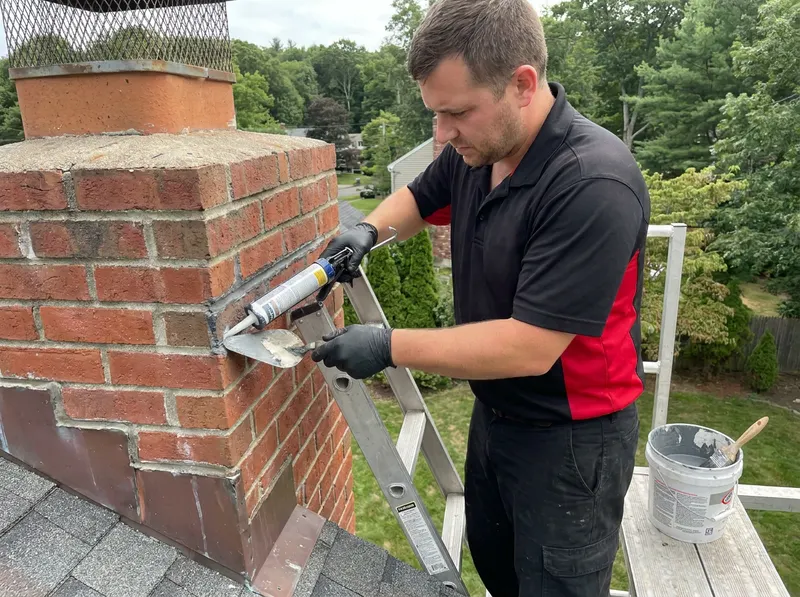
A chimney water leak rarely comes from where the stain appears indoors. Water enters at the highest failed point, a cracked crown, a lifted step-flashing joint on the roof, an open mortar joint, or bare, absorbent brick, then travels down inside the chase before it shows as a ceiling stain or a damp firebox. Because of that travel path, a leaking chimney repair starts with finding the true entry point, not sealing the first crack in sight. On homes near Candlewood Lake and the older Padanaram and Germantown roofs, the most common source is a hairline-cracked concrete crown; on King Street and Clapboard Ridge properties with steep roof pitches, failed step flashing at the roof-to-brick seam is the frequent culprit.
The fix depends on the source. A cracked crown is patched or rebuilt with a flexible crown coat; loose or short flashing is re-cut into the mortar and sealed; open joints are repointed with fresh mortar; and porous brick that is soaking through gets a chimney waterproofing treatment. Chimney waterproofing uses a vapor-permeable siloxane repellent, the type the Chimney Safety Institute of America (CSIA) recommends, that blocks liquid water from entering while still letting trapped moisture escape as vapor. A film-forming paint or acrylic sealer is the wrong choice on a chimney: it traps freeze-thaw moisture behind the coating and spalls the brick face, a real risk on Miry Brook and Great Plain chimneys that see repeated winter freeze cycles.
Deciding what you need follows the leak. If a single stain appears after wind-driven rain and the crown looks sound, the fix is usually flashing, the lower-cost path. If the brick darkens broadly after every storm and the mortar is sandy to the touch, waterproofing plus repointing addresses the whole face. If water reaches the firebox or the damper is rusting, the leak has been active a while and a Level 2 inspection under NFPA 211 is warranted to check the flue liner for water damage before you burn again. Waterproofing is preventive, not a cure for an active structural leak: seal the crown and flashing first, then apply the repellent, or the coating simply covers an ongoing problem.
Every Danbury leak visit begins with a Level 1 inspection of the readily accessible chimney exterior and interior; a Level 2 inspection, which adds attic and roof-line access plus a flue scan, is used when a leak has reached the interior. Homeowners in Beaver Brook, Hayestown, Shelter Rock, and Mill Plain receive photos of each defect, so the verdict, repair needed or not, is documented rather than described over the phone. A free on-site estimate confirms the source and the price before any work is scheduled.
Every job gets a firm, written price after a free on-site visit.
Tell us about your chimney leak repair & waterproofing job in Danbury and we'll send a clear, written quote, usually the same day.
 Crown Flue Chimney Sweep