A chimney cap is the metal cover over the flue opening that keeps rain, snow, birds, squirrels, and windblown leaves out, and stops sparks from landing on the roof. The National Fire Protection Association standard…
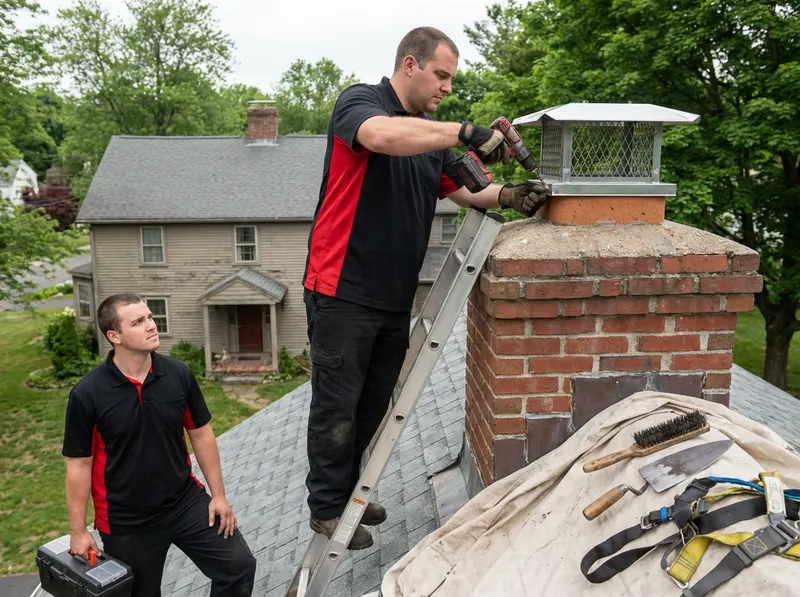
A chimney cap is the metal cover over the flue opening that keeps rain, snow, birds, squirrels, and windblown leaves out, and stops sparks from landing on the roof. The National Fire Protection Association standard NFPA 211 and the Chimney Safety Institute of America (CSIA) both treat a properly fitted cap as basic weather and animal protection for the flue. In Danbury the two most common calls are the same all across Mill Plain, Miry Brook, Great Plain, and Clapboard Ridge: a cap that a windstorm off Candlewood Lake blew back or off entirely, and an older galvanized cap that has rusted through after several Fairfield County winters.
Reattaching versus replacing is the first decision, and it comes down to the metal itself. If the cap loosened at the mount but the mesh and lid are still solid, reattaching the chimney cap with new fasteners or a proper flue-tile bracket is the fitting repair, this is the quick, low-cost path and often part of the same visit. If the cap is bent, the mesh is torn, or rust has eaten through the crown of the lid, replacement is the sound choice, because a corroded cap will fail again in the next King Street windstorm. Single-flue caps clamp onto a round or square flue tile; multi-flue caps are custom-sized outer-mount covers for wide masonry crowns common on older Germantown and Padanaram homes.
The cap sits on the chimney crown, the sloped mortar or concrete slab at the top of the masonry. When a cap blows off, the crown underneath is often cracked or spalled, because the same freeze-thaw cycles and wind exposure hit both. Chimney crown repair (sealing hairline cracks with a flexible crown coating, or rebuilding a badly spalled crown) is a separate line item from the cap itself, and the crown condition is documented with photos during the estimate so a homeowner sees exactly what is and isn't needed. A cap-only fix on a failing crown is a short-term fix; the honest verdict is stated on-site rather than bundled quietly into the bill.
Common edge cases: a chimney serving a wood stove or fireplace in a Beaver Brook or Hayestown home may need the flue checked for creosote at the same time, which falls under a CSIA Level 1 or Level 2 inspection rather than the cap work. Very tall or steep roofs (some Shelter Rock and Great Plain properties) can require extra access equipment, which affects the range. Caps for oil or gas appliance flues must match the flue type and are not interchangeable with a wood-flue cap. A free on-site estimate confirms the flue size, the cap type, and whether the crown needs attention before any price is set.
Every job gets a firm, written price after a free on-site visit.
Tell us about your chimney cap repair & replacement job in Danbury and we'll send a clear, written quote, usually the same day.
 Crown Flue Chimney Sweep